Introduction
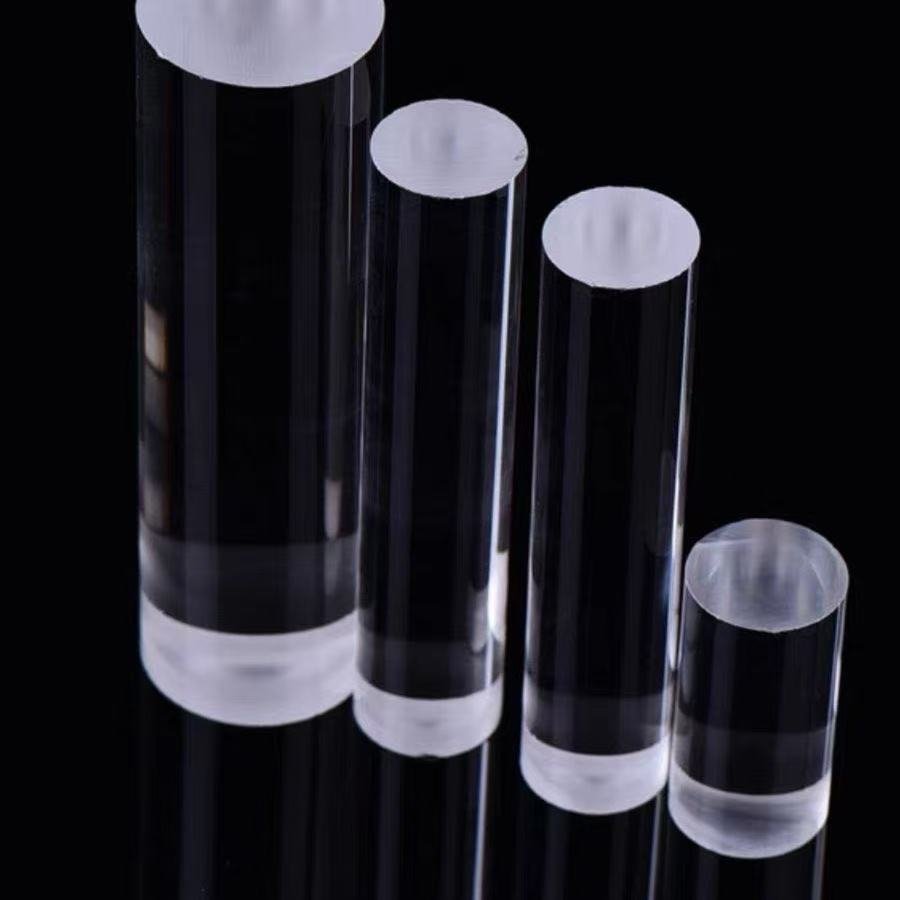
Clear fused quartz rods are solid cylindrical components manufactured from high-purity fused silica and engineered for applications requiring exceptional thermal stability, optical clarity, chemical resistance, and dimensional accuracy. Compared with conventional glass or ceramic materials, fused quartz maintains its structural integrity under extreme temperatures while offering excellent resistance to thermal shock and most corrosive chemicals.
These characteristics make clear fused quartz rods an ideal choice for semiconductor processing equipment, photovoltaic manufacturing systems, laboratory instruments, optical devices, UV applications, analytical equipment, and custom industrial machinery. Whether used as support rods, alignment pins, optical components, heating fixtures, or precision machined parts, quartz rods provide long-term reliability in demanding environments.
FGQuartz manufactures both standard and custom clear fused quartz rods with precision machining, grinding, polishing, drilling, and fabrication services. From simple solid rods to complex machined quartz components, we provide manufacturing solutions tailored to customer drawings and technical requirements.
What are Clear Fused Quartz Rods?
Clear fused quartz rods are solid cylindrical bars produced by melting high-purity silica into transparent fused quartz. Unlike hollow quartz tubes, quartz rods provide greater mechanical strength and rigidity, making them suitable for structural, optical, and precision engineering applications where solid components are required.
The material combines several properties that are difficult to achieve simultaneously in conventional engineering materials. It exhibits excellent thermal stability, a very low coefficient of thermal expansion, outstanding chemical resistance, and broad optical transmission from ultraviolet through visible wavelengths into portions of the infrared spectrum.
These characteristics allow quartz rods to operate reliably in environments involving rapid heating and cooling, high operating temperatures, corrosive chemicals, or sensitive optical systems.
Because fused quartz contains extremely low impurity levels and maintains stable physical properties over a wide temperature range, it is widely used in manufacturing equipment where contamination control and dimensional consistency are essential.
Depending on the application, clear fused quartz rods may function as:
Many industrial systems require quartz rods not only for their material properties but also because they can be precisely machined into customized geometries without compromising their thermal performance.
Compared with metal components, quartz rods provide electrical insulation and excellent resistance to oxidation. Compared with ordinary glass, they offer significantly higher operating temperatures and much greater resistance to thermal shock.
These advantages make clear fused quartz rods one of the most versatile materials used throughout semiconductor manufacturing, laboratory research, photovoltaic production, optical engineering, and scientific instrumentation.
Solid Quartz Rods vs Quartz Tubes
Although both products are manufactured from fused quartz, solid rods and hollow tubes are designed for different engineering purposes.
Quartz tubes are primarily used for transporting gases, enclosing heating elements, protecting sensors, or serving as reaction chambers.
Quartz rods, on the other hand, are selected when mechanical strength, dimensional stability, or precision support functions are required.
Engineers commonly specify quartz rods when designing equipment that requires:
Choosing the appropriate component depends on the mechanical and thermal requirements of the application.
Applications and Industries
Because of their unique combination of mechanical strength, thermal resistance, optical performance, and chemical stability, clear fused quartz rods are used across numerous high-technology industries.
Semiconductor Manufacturing
Semiconductor fabrication requires materials capable of maintaining dimensional stability during repeated thermal cycles while minimizing contamination inside processing equipment.
Quartz rods are commonly used as:
Their low thermal expansion helps maintain accurate positioning during high-temperature manufacturing processes, while the purity of fused quartz supports contamination-sensitive production environments.
Solar Photovoltaic Manufacturing
Quartz rods are widely incorporated into diffusion furnaces and thermal processing equipment used during solar cell production.
Typical applications include:
Support structures
Heater assemblies
Process fixtures
Positioning components
Mechanical spacers
Their ability to withstand continuous high-temperature exposure contributes to stable production conditions and long service life.
Optical Equipment
The excellent optical transmission of clear fused quartz makes solid rods suitable for specialized optical systems.
Applications include:
Because fused quartz transmits ultraviolet wavelengths much more effectively than conventional glass, it is often selected for optical systems operating in the UV spectrum.
Laboratory and Scientific Research
Research laboratories frequently use quartz rods in experimental equipment where thermal resistance and chemical compatibility are essential.
Common laboratory applications include:
Sample holders
Reactor supports
Experimental fixtures
High-temperature testing
Vacuum systems
Analytical instruments
Quartz rods remain dimensionally stable during repeated heating and cooling cycles, making them particularly suitable for laboratory environments requiring reliable and repeatable performance.
Industrial Heating Systems
Many industrial heating systems require support components capable of operating continuously at elevated temperatures.
Quartz rods are commonly installed as:
Heating element supports
Furnace fixtures
Insulating components
Positioning rods
Mechanical supports
Unlike metallic alternatives, fused quartz provides electrical insulation while maintaining excellent resistance to oxidation and thermal deformation.
Analytical and Environmental Equipment
Precision analytical instruments often incorporate quartz rods where dimensional stability and chemical resistance are required.
Applications include:
The transparency and stability of fused quartz help maintain reliable analytical performance over extended operating periods.
OEM Equipment Manufacturing
Many equipment manufacturers require custom quartz rods with precise machining features rather than standard cylindrical stock.
Depending on the application, rods may include:
By manufacturing directly from engineering drawings, custom quartz rods can be integrated into complex industrial equipment while reducing secondary machining and assembly work.
Technical Specifications
Clear fused quartz rods are available in a broad range of diameters and lengths to accommodate different industrial applications. While standard solid rods are suitable for many general-purpose uses, semiconductor equipment, optical systems, laboratory instruments, and OEM machinery often require custom machining and dimensional tolerances.
At FGQuartz, we manufacture clear fused quartz rods according to customer specifications, engineering drawings, or application requirements. In addition to supplying standard rod stock, we provide precision machining and secondary fabrication services to deliver finished components ready for assembly.
The following table outlines our general manufacturing capabilities.
Property | Specification |
|---|
Material | Clear Fused Quartz (High-Purity Fused Silica) |
Purity | High-purity fused silica for industrial, optical, and laboratory applications |
Diameter | Standard and custom diameters available |
Length | Cut-to-length or custom lengths according to drawings |
Temperature Resistance | Suitable for continuous high-temperature operation and rapid thermal cycling |
Surface Finish | As-drawn, ground, fire-polished, mechanically polished, or optical polished |
Straightness | Controlled according to application requirements |
Diameter Tolerance | Produced according to customer specifications |
End Finish | Flat, chamfered, rounded, polished, or customized |
Machining Options | Drilling, slotting, grooving, threading (where applicable), CNC machining |
Fabrication Options | Welding, assembly, flame forming, precision finishing |
Cleaning | Industrial cleaning available before packaging |
Because every application is different, the final dimensions and tolerances are determined by the customer's design requirements. Semiconductor process equipment typically requires tighter dimensional control than general industrial applications, while optical components often require superior surface quality.
In addition to straight rods, we also manufacture stepped rods, precision-ground rods, and fully machined quartz parts for customers seeking ready-to-install components.
Manufacturing Capability
Manufacturing precision quartz rods requires a combination of material expertise, precision machining, flame-working experience, and rigorous inspection. Unlike conventional glass products, fused quartz must be processed using specialized equipment and techniques to preserve its thermal and optical properties.
Our manufacturing capabilities cover the complete production process, from raw quartz rod preparation to precision machining, fabrication, inspection, and final cleaning.
Precision Cutting
Every project begins with accurate cutting to the required length.
Using dedicated cutting equipment, quartz rods are processed to minimize chipping while maintaining square and consistent end faces.
Depending on customer requirements, rods may be supplied as:
Accurate cutting reduces subsequent machining time and improves dimensional consistency throughout the manufacturing process.
Precision Grinding
Grinding is essential for achieving accurate diameters, flat surfaces, and tight dimensional tolerances.
Typical grinding operations include:
Diameter grinding
End-face grinding
Flat surface grinding
Chamfer preparation
Step grinding
Precision sizing
Ground quartz rods are commonly specified when components must fit bearings, fixtures, support brackets, or precision mechanical assemblies.
For semiconductor and optical applications, grinding also prepares surfaces for subsequent polishing operations.
Surface Polishing
The surface finish of a quartz rod influences both optical performance and mechanical reliability.
Depending on the intended application, we offer several polishing methods:
Fire polishing
Mechanical polishing
Optical polishing
End-face polishing
Optically polished rods are commonly used in analytical instruments, laser systems, and UV equipment where light transmission and surface quality are critical.
For industrial components, polishing can also reduce surface imperfections and improve resistance to thermal stress.
CNC Machining
Many customers require quartz rods with features that cannot be achieved through standard rod manufacturing alone.
Our CNC machining capability allows complex features including:
Precision holes
Cross holes
Blind holes
Slots
Grooves
Steps
Flats
Precision shoulders
Custom profiles
These machining operations enable quartz rods to function as complete engineering components rather than simple raw materials.
For OEM customers, supplying fully machined parts reduces assembly time and eliminates additional processing after delivery.
Quartz Welding and Fabrication
Solid quartz rods are frequently incorporated into larger fabricated assemblies.
Using hydrogen-oxygen flame processing, our experienced technicians manufacture custom quartz structures including:
Rod-to-tube assemblies
Rod-to-plate structures
Support frames
Laboratory apparatus
Semiconductor fixtures
Furnace assemblies
Optical holders
By combining machining and quartz welding within a single manufacturing process, complex assemblies can be produced with improved dimensional consistency.
Cleaning
Many quartz rod applications require clean surfaces before installation.
After machining and fabrication, components undergo appropriate cleaning procedures to remove machining residues and handling contaminants.
Cleaning options include:
Ultrasonic cleaning
Deionized water rinsing
Particle removal
Surface inspection
Protective packaging
Proper cleaning helps reduce contamination during installation, particularly for semiconductor equipment, laboratory systems, and optical devices.
Manufacturing Workflow
Each project follows a structured production sequence designed to ensure consistent quality from raw material to finished component.
Typical manufacturing steps include:
Engineering drawing review
Material preparation
Precision cutting
Grinding
CNC machining
Flame processing or welding (if required)
Surface polishing
Cleaning
Dimensional inspection
Protective packaging and shipment
This integrated workflow allows us to support both one-off prototypes and recurring production while maintaining consistent manufacturing standards.
Why Choose Our Clear Fused Quartz Rods?
Selecting the right quartz rod supplier involves more than comparing dimensions or pricing. For industrial manufacturers, long-term reliability depends on machining accuracy, material consistency, fabrication capability, and technical support throughout the project.
Rather than supplying only standard quartz stock, we focus on producing precision quartz components that integrate directly into customer equipment.
Engineering Support Before Production
Every project begins with a technical review of the customer's drawings or application requirements.
Our engineering team evaluates:
Component geometry
Machining feasibility
Tolerance requirements
Assembly method
Operating environment
This early-stage review helps identify potential manufacturing challenges before production begins, reducing unnecessary revisions and improving project efficiency.
Precision Machining Beyond Standard Rods
Many suppliers provide only straight quartz rods.
Our capabilities extend far beyond raw material supply, including:
Diameter grinding
Precision polishing
Hole drilling
Slot machining
CNC processing
Quartz welding
Fabricated assemblies
Customers receive finished components ready for installation rather than unfinished stock requiring additional processing.
Consistent Manufacturing for Repeat Orders
Industrial equipment manufacturers often require identical components over multiple production batches.
We use standardized production procedures and inspection processes to improve dimensional repeatability, helping customers maintain consistent assembly quality and reduce variation between orders.
Flexible Production Quantities
Whether developing a new instrument or supplying components for established manufacturing equipment, production requirements vary significantly.
We support:
This flexibility allows customers to move efficiently from product development to full-scale production without changing suppliers.
Reliable Technical Communication
Successful custom manufacturing depends on clear communication.
Throughout the quotation, engineering review, production, and shipment process, we work closely with customers to ensure technical requirements are understood before manufacturing begins.
By combining engineering support with precision fabrication, we help customers obtain quartz components that match their application requirements while simplifying the procurement process.
Custom Quartz Solutions
Standard quartz rods are suitable for many industrial applications, but specialized equipment often requires components manufactured to precise engineering specifications. For semiconductor systems, optical instruments, laboratory equipment, and OEM machinery, dimensional accuracy and fabrication quality are just as important as the material itself.
At FGQuartz, we provide custom manufacturing services for clear fused quartz rods based on customer drawings, CAD models, or technical specifications. Whether you require a simple cut-to-length rod or a fully machined quartz assembly, our engineering and production teams work together to deliver components that integrate directly into your equipment.
Drawing-Based Manufacturing
Every custom project begins with understanding the customer's design intent.
We accept a variety of engineering documents, including:
Our engineering team reviews dimensions, tolerances, machining requirements, and application conditions before production begins. This review helps identify manufacturing considerations early and reduces the risk of unnecessary revisions during production.
For projects without complete drawings, we can also assist in evaluating sample parts and discussing feasible manufacturing approaches based on the intended application.
OEM Manufacturing
Many of our customers are equipment manufacturers who require consistent quartz components as part of their production process.
We support OEM manufacturing programs that include:
Custom-designed quartz rods
Proprietary component production
Long-term repeat manufacturing
Batch consistency
Production scheduling
Protective packaging for assembly lines
By producing according to approved engineering drawings and maintaining standardized manufacturing procedures, we help OEM customers achieve reliable product consistency across multiple production batches.
Prototype Production
New equipment development often begins with a small number of prototype components for testing and validation.
Our prototype manufacturing service supports:
Producing prototype quartz rods allows customers to evaluate dimensional fit, mechanical performance, and manufacturing feasibility before committing to larger production quantities.
Throughout the prototype stage, our engineering team maintains close communication with customers to address design revisions and optimize manufacturability where appropriate.
Mass Production
Once a design has been validated, production can be scaled efficiently while maintaining consistent quality.
Our manufacturing system supports:
Scheduled production
Repeat orders
Medium-volume manufacturing
Large production quantities
Stable dimensional control
Consistent processing methods
Whether supplying hundreds of support rods for semiconductor equipment or recurring orders for laboratory instrumentation, we focus on maintaining repeatability across every production batch.
Frequently Asked Questions
Can you manufacture quartz rods according to our drawings?
Yes. We regularly manufacture custom clear fused quartz rods according to customer drawings, CAD files, or physical samples. Our machining capabilities include cutting, grinding, polishing, drilling, CNC machining, and quartz welding.
What industries use clear fused quartz rods?
Clear fused quartz rods are widely used in semiconductor manufacturing, photovoltaic production, laboratory research, optical systems, UV equipment, analytical instruments, chemical processing, and industrial heating equipment.
What is the difference between quartz rods and quartz tubes?
Quartz rods are solid components designed primarily for structural support, alignment, mechanical positioning, and optical applications. Quartz tubes are hollow components generally used for gas flow, reaction chambers, furnace process tubes, and protective sleeves.
Selecting the appropriate product depends on the mechanical and functional requirements of the application.
Can you manufacture custom diameters and lengths?
Yes. We manufacture quartz rods in both standard and custom dimensions, including special diameters, lengths, end configurations, and machined features according to customer specifications.
What machining services are available?
Our manufacturing capabilities include:
Precision cutting
Diameter grinding
Surface polishing
Optical polishing
Hole drilling
Slot machining
Groove machining
CNC machining
Quartz welding
Assembly fabrication
These processes allow us to supply finished components rather than raw material only.
Are quartz rods suitable for high-temperature applications?
Yes. Fused quartz exhibits excellent thermal stability and a very low coefficient of thermal expansion, making it suitable for applications involving continuous high temperatures and repeated thermal cycling. The final suitability depends on the specific component design and operating conditions.
Can you supply prototype quantities?
Yes. Prototype production is available for equipment development, laboratory testing, engineering validation, and small-batch evaluation before mass production.
How do you control product quality?
Each production order follows defined inspection procedures, including dimensional verification, visual inspection, machining checks, surface quality evaluation, and final cleaning before packaging. Additional inspection requirements can also be incorporated according to customer specifications.
Can quartz rods be integrated into welded assemblies?
Yes. Quartz rods can be combined with tubes, plates, discs, flanges, and other quartz components through precision flame welding to produce complete custom assemblies.
How can I request a quotation?
Simply send us your drawing, required dimensions, quantity, machining details, application information, and any special technical requirements. Our engineering team will review your project and provide a detailed quotation together with manufacturing recommendations where appropriate.
Request a Quote for Custom Clear Fused Quartz Rods
Whether you are developing new semiconductor equipment, manufacturing optical instruments, building laboratory systems, or sourcing precision quartz components for industrial machinery, we are ready to support your project with custom-manufactured clear fused quartz rods.
To help us prepare an accurate quotation, please provide:
Engineering drawing or sample (if available)
Rod diameter and length
Required machining or fabrication details
Quantity
Operating environment or application
Any special inspection or packaging requirements
Our engineering team will review your requirements and recommend an appropriate manufacturing solution based on your design, application, and production needs.